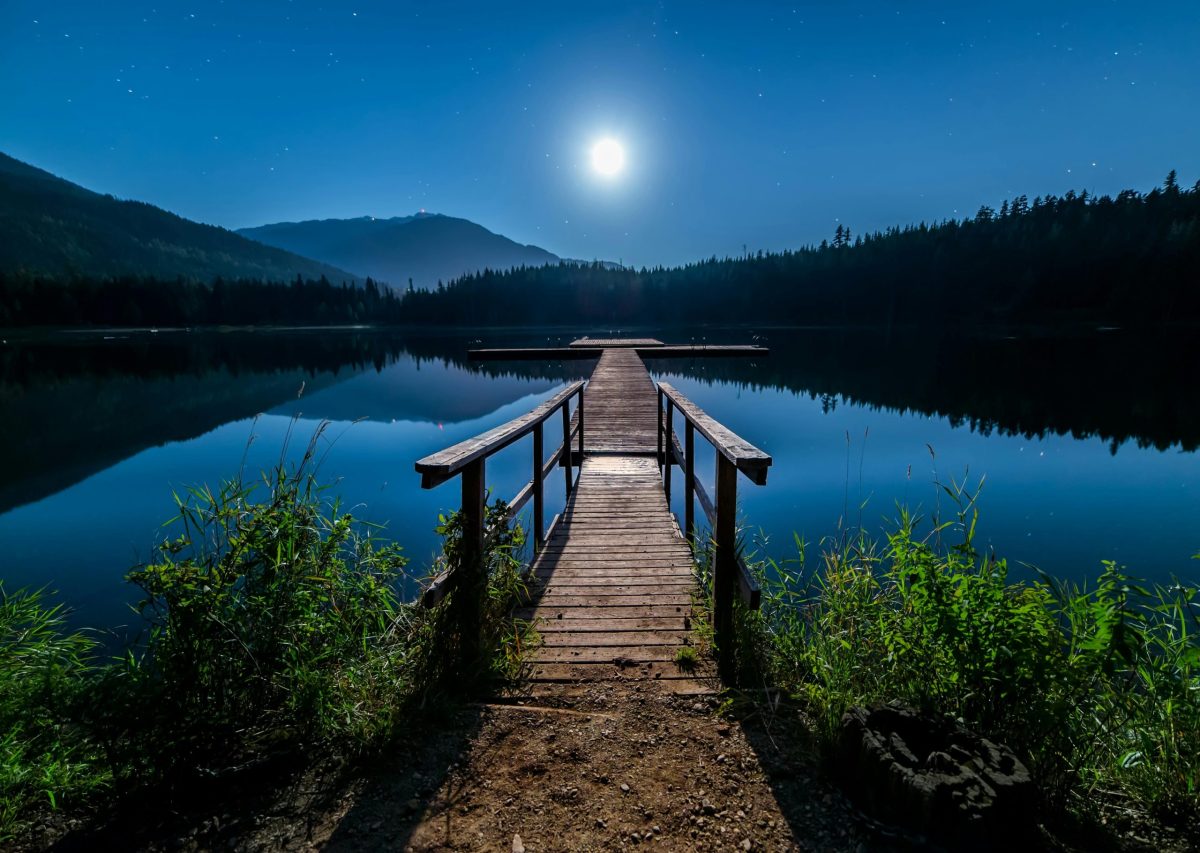
“Wildness is a form of sophistication, because it carries within it true knowledge of our place in the world.”
—Martin Shaw
There is a particular kind of knowing that doesn’t arrive through analysis. It arrives when you stop. When the meeting ends, the screen goes dark, and you step outside to find the sky doing something unreasonable with light. You weren’t looking for insight. But something shifted anyway.
Coaches have a word for this. So do shamans, elders, and wilderness guides. They’ve had words for it for a very long time.
What Nature-Based Coaching Actually Is
Nature-based coaching is exactly what it sounds like, and also much more than it sounds like.
At its simplest, it means bringing the natural world into the coaching conversation — whether through working outdoors, inviting a client to step away from their screen and look at the sky, or simply using the living world as a source of metaphor, reflection, and renewed perspective.
At its deepest, it rests on a radical premise: that mind is not confined to the skull. That intelligence, as philosopher David Abram wrote, is “a property of the earth” — not something we possess, but something we participate in, especially when we step back into the living world that shaped us.
This isn’t mysticism dressed up as coaching. It’s increasingly what the science says too. Research consistently shows that exposure to natural environments produces measurable improvements in cognitive function, emotional regulation, and psychological wellbeing. Walking in nature, listening to birdsong, even simply viewing natural scenes reduces rumination and expands the quality of attention. What these studies may actually be documenting isn’t the benefit of an intervention. It’s the cost of an absence. We were denatured before we were coached. The forest is simply giving us back what the city took.
The Oldest Transformational Framework We Have
Here’s where things get interesting for coaches specifically.
Long before ICF competencies, before cognitive behavioral models, before the humanistic revolution of the mid-twentieth century, human cultures around the world had already developed sophisticated frameworks for facilitating transformation. They called them rites of passage.
Anthropologist Arnold van Gennep identified the core structure in 1909: Separation, Liminality, and Incorporation. The initiate departs from ordinary life. They enter a threshold zone where the old self dissolves and a new one begins to form. Then they return, changed, to their community. Joseph Campbell later mapped the same arc onto the world’s mythological traditions and found it everywhere, in the Buddha, in Odysseus, in the European fairy tale, in Star Wars.
That structure isn’t arbitrary. It maps, with uncanny precision, onto what happens in any genuinely developmental coaching engagement. A client feels the call — something is no longer working, or something new is pressing to emerge. They cross a threshold into a period of real descent: challenging their assumptions, dismantling what no longer serves, sitting with the discomfort of being between who they were and who they are becoming. And eventually, if the work is real, they return. Not to the same place. To the same coordinates, but elevated, carrying something they didn’t have before.
The matrix I’ve developed for this work maps these movements across four quadrants borrowed from the natural calendar: Severance (Fall), Descent (Winter), Return (Spring), and Integration (Summer). The seasonal framing isn’t decorative. It’s structural. Seasons embody the paradox at the heart of developmental change: that transformation moves in cycles, not straight lines. That you will revisit the same territory, but as a different person, in an altered landscape.
The Great Separation Wound
There’s a reason this work is more urgent now than it might seem.
Modern coaching, like most modern disciplines, has been shaped by a particular interpretation of scientific rigor: measurable, linear, performance-oriented. There’s real value in that tradition. But in its enthusiasm for the quantifiable, it has largely excised what indigenous wisdom traditions and ecopsychology both understand to be central: that human beings are not separate observers of a natural world. We are participants in a vast, intelligent, relational field.
Aboriginal scholar Tyson Yunkaporta writes that thinking and learning “occur outside of the brain in the objects and beings we interact with and the relationships in between.” The 4E cognitive science tradition makes a remarkably similar claim from within the Western scientific frame: that cognition is not just brain-based but embodied, embedded, enacted, and extended through our environment.
What both traditions are pointing at is that when we remove a coaching client from any contact with the living world and seat them under fluorescent lights in front of a performance metrics dashboard, we are already constraining the very intelligence we’re trying to develop.
The separation of humans from the natural world isn’t just an environmental issue. It’s a developmental one. Ecopsychologists describe it as a kind of existential wound — the consequence of centuries of progressive denaturing, of coming to see the forest not as a relational partner but as a resource, a backdrop, or at best a health intervention.
The good news is that the wound is not permanent. And coaching — particularly coaching grounded in rites of passage principles and nature-based practice — is unusually well placed to help address it.
Bringing the Wild Into the Room
You don’t need to take your clients on a five-day wilderness immersion to do this work, though that is certainly one powerful option.
Consider Ellie, the director of a fast-growing psychological services company, wrestling with whether to accept an acquisition offer. We’d done good work together — unpacked the beliefs, explored the values, examined the practicalities. But she kept circling. The same voices, the same questions, the same cognitive loop.
I noticed there was a tree visible in the garden behind her on our Zoom call. I invited her to go out and ask it her question, and wait.
She laughed. Then she told me she already had a habit of doing exactly that, secretly, when no one was watching.
She went out. Came back five minutes later. Something had shifted — her body softer, her thinking wider, a simple next step clear. Was it the tree? The interruption of the cognitive loop? The symbolic act of stepping outside? Almost certainly all of it. The natural world is not a single variable. It’s a whole different kind of relational field.
In practice, nature-based coaching can be as simple as:
Replacing digital backgrounds with natural imagery on video calls, which research suggests measurably affects thinking quality. Inviting clients to step outside during a session and bring what they find back into the conversation. Offering questions that use the natural world as a thinking partner: “If you were to ask the clouds about this situation, what might they say?” Using natural metaphors to replace mechanistic ones — one client describing himself as “an oak among the saplings” opened up an entire ongoing inquiry into his identity and leadership that no performance framework could have reached. Creating simple rituals that mark thresholds: the beginning and end of a session, the transition from one life chapter to another. Even these small ceremonial gestures activate something older and more embodied in the client than goal-setting alone can reach.
The Bigger Picture
This matters beyond the individual coaching session.
At a time when AI is being enthusiastically deployed to replicate and scale human developmental conversations, it seems worth pausing to notice what is actually irreplaceable in that interaction. The coach is not an information-processing system. The client is not an algorithm to be optimized. Both are living organisms, shaped by deep evolutionary histories, embedded in a natural world that still has more to say to them than any chatbot will.
The rites of passage framework, and the ecopsychological understanding that informs it, offers coaching something it genuinely needs: a map that is simultaneously ancient and evidence-aligned, one that honors the full complexity of human transformation without reducing it to metrics or mechanistic models.
Martin Shaw, mythologist and wilderness guide, puts it plainly: “Wildness is a form of sophistication, because it carries within it true knowledge of our place in the world.”
That knowledge is also, it turns out, excellent coaching material.
Join our 5-day Empowerment retreat to learn nature-based skills and earn 30 ICF-CCEUs. FIND OUT MORE.
Rod Francis is a coach, coach educator, and the founder of InterActualizer’s ICF-Accredited Emergent Coach Training. A former professional dancer with fifteen years of coach training experience across Europe and the USA, his work sits at the intersection of ancient wisdom traditions, ecopsychology, and the emerging science of embodied mind — brought to bear on the very human business of change. He believes coaching, done well, is one of the oldest arts there is.